Oct 18 – Nov 18, Kelly
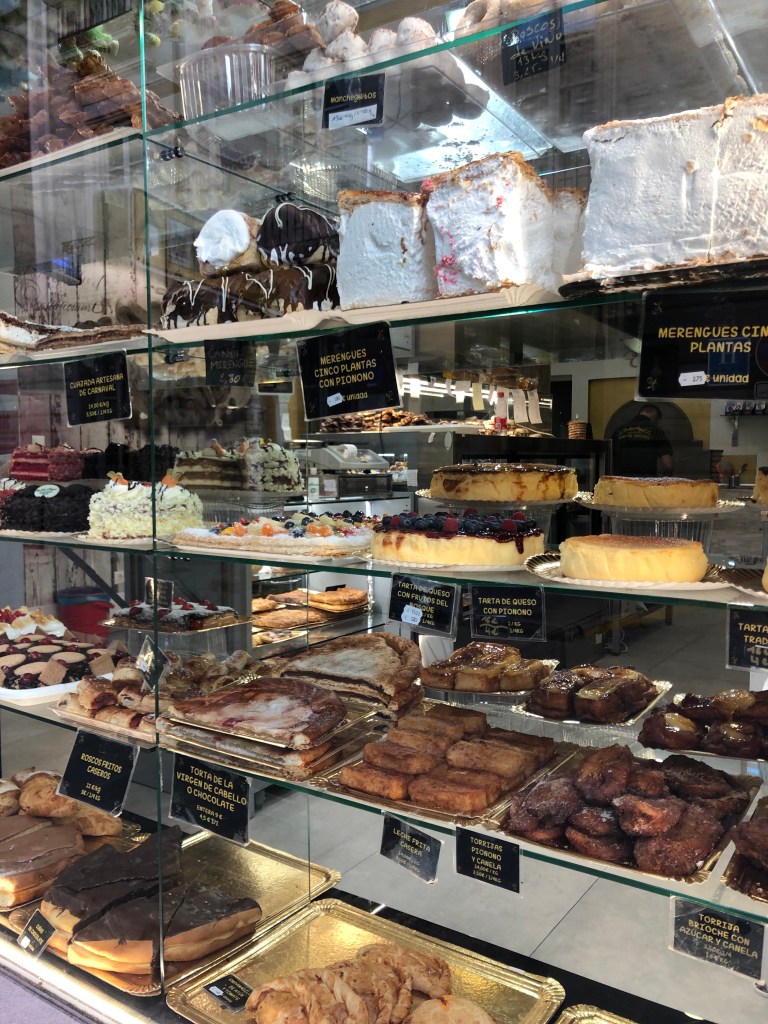
The best thing that we discovered upon our arrival to Granada, was that our apartment for the next four weeks was two floors above an incredible bakery, El Dulce Angel! Every day the 6’ x 6’ plate glass window displayed a new and different selection of incredible cakes, sky-high meringues, croissants, tarts, pies, empanadas, … And every day, like kids looking in a toy store window around Christmas time, young and old would stop and have a look and drool.
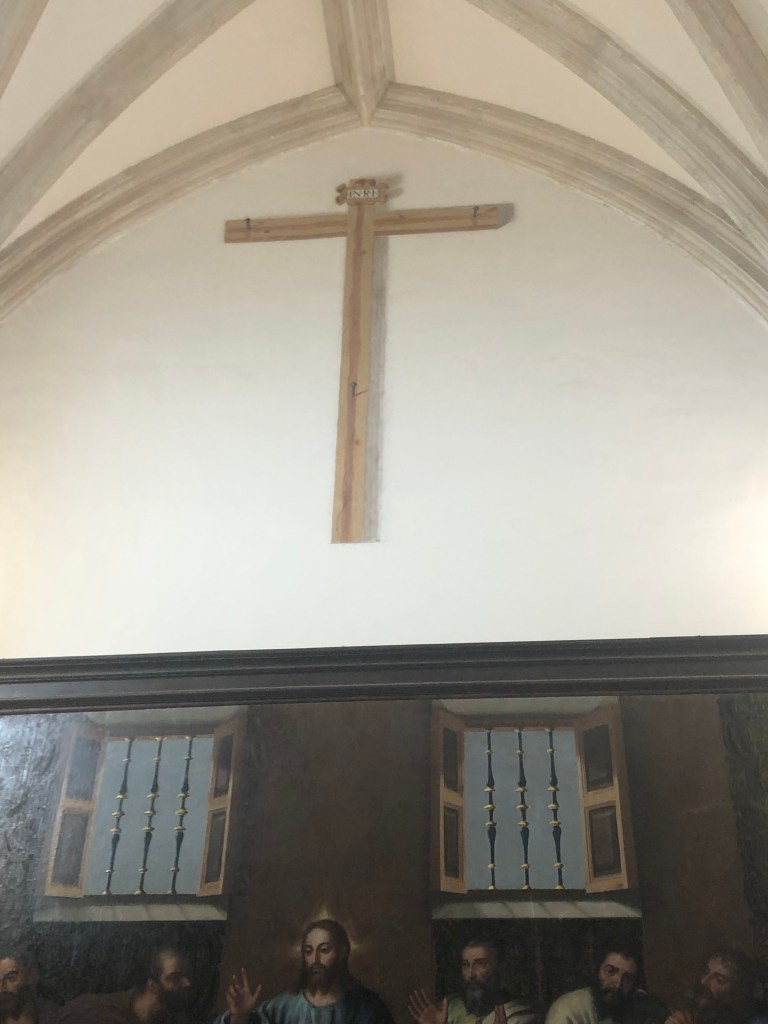
The Alhambra is clearly Granada’s franchise player, and I’ll talk about it in a separate post, but we found some of its other sites really amazing as well: the cathedral with its ancient graffiti (painted by university students in bull’s blood!), the Sacromonte Abbey (with its 16th century underground cave chapels), “El Banuelo” a 12th century hammam with its little star skylights, the Monasterio de la Cartuja on the hill (that had a cross painted on a wall in a side-chapel that looked so real that a little bird tried to perch on it!).
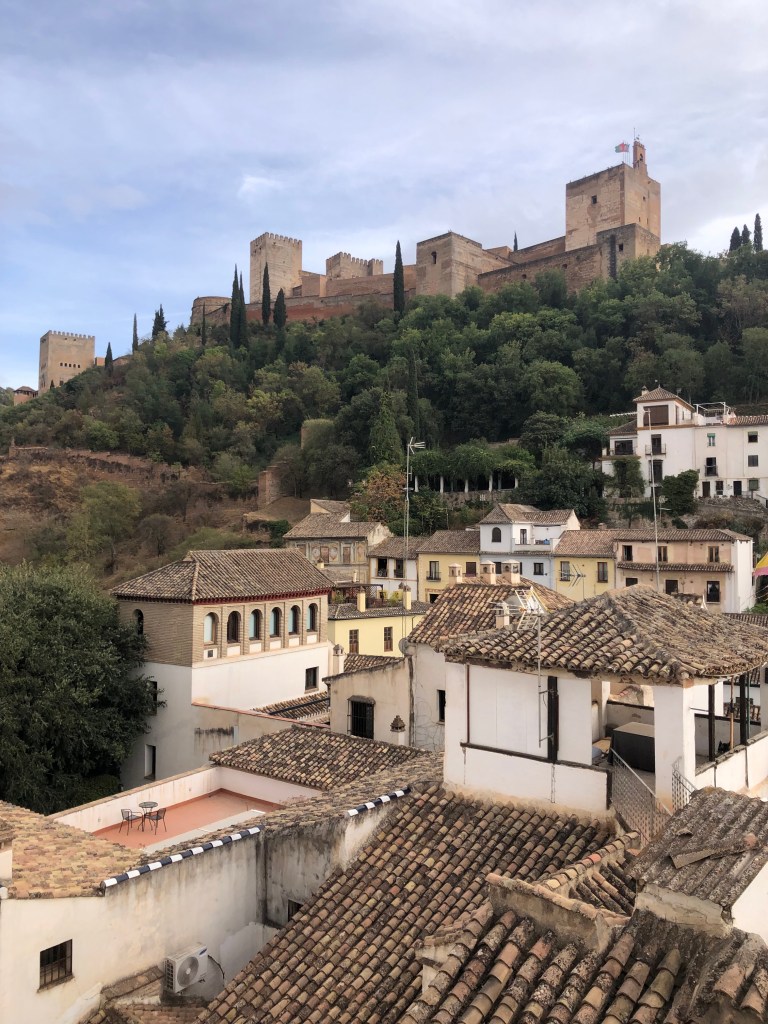
As for the rest of the mid-sized city, there is an abundance of churches, abbeys, monasteries, Roman and Visigoth bits and pieces, and important nods to Queen Isabel the Catholic and her husband Ferdinand. We loved the Albeicin neighborhood perched on a hillside just across from the Alhambra. It’s narrow, cobbled, winding streets and stairways are squished full of ancient moorish homes. Charming! And we will never forget hearing and seeing the flamenco music and passionate dancers as we sipped wine tucked into a small cave in an ancient gypsy neighborhood.
But the lasting impact, for me, was the Moorish influences that have remained through the centuries and cling like glitter to Granada. Of course, the Alhambra sitting up on the hillside is a reminder, but I’m talking about things like the stone water troughs (still in use!) In small neighborhood squares, an ancient tiled archway glimpsed through an open door of a private residence, a richly carved ceiling in a restaurant, worn marble steps leading up a narrow passageway, or a giant stone archway looming at the end of a shadowed alley. As we walked to the many “named” points of interest, we always kept an eye out for the “unnamed” relics tucked into the most normal of spaces!
Legend has it that in the late 15th century, as the last Sultan Boabdil left Granada after centuries of Moorish rule, he reigned in his horse just before losing sight of the city, and turned to look back for one last time upon lovely Granada… and he let out an audible sigh. I get it.


 ETA-TBD
Leave a comment